
Volusia County Previous-Resident Sources
No one roll supplies every person at a Volusia County address. The parcel card gives the present owner and a bridge into recorded deeds. Deeds trace title, not all occupants. Directory, census, newspaper, map, and permit sources fill different eras, with access that changes by collection and city. The era table keeps those limits visible.
| Source | Local time span | Access point | Evidence about the address |
|---|---|---|---|
| Online Official Records | April 4, 1988 to present | Volusia Clerk web inquiry | Indexed conveyances, parties, dates, and available images |
| Recorder media and books | Research access back to 1887 | Room A121 and Historical Records, DeLand | Earlier deeds and grantor-grantee indexes |
| VCPA parcel roll | Current roll plus displayed sales history | Property Appraiser web search | Present owner, situs, mailing address, legal description, deed links |
| City and reverse directories | Exact Volusia runs not established | State Library and VCPL databases | Listed occupant, address, spouse, and other edition fields |
| Federal census | Released schedules through 1950 | Library genealogy databases and archives | Household members and neighborhood context |
| Local newspapers | News-Journal archive reported back to 1915; other titles vary | VCPL and NewsBank | Moves, deaths, heirs, sales, and social notices |
| Sanborn maps and permits | City, sheet, and agency coverage varies | Library of Congress; correct building custodian | Building form, street clues, and alteration dates |
Start with VCPA even for an old inquiry because its parcel number and legal description help keep one property distinct. For post-1988 transfers, continue online. Earlier ownership requires the courthouse. To identify past residents who did not own the property, shift to the address side of a directory, an open census schedule, or a dated newspaper.
Start Volusia County Address History
Search the VCPA Real Property Search by Location Address. Open the parcel card and save the parcel or alternate key, situs address, owner mailing address, legal description, municipality or tax district, sales references, and MapIT link. “Situs” means the address assigned to the land or building. It can differ from the mailing address used for the tax notice.
That split matters in Volusia County. A coastal condominium owner may live far away, while hundreds of legal units share one base street number. In Deltona, a subdivision's lot and block can be more stable than street text. Homestead status is consistent with a primary-residence claim, but it does not list each household member or prove who occupied the address on a given day.
Trace Volusia County's Deed Chain
The Volusia Clerk Official Records index accepts a name, instrument number, book and page, or advanced criteria. Begin with the current parcel's latest qualified-sale deed. Each deed identifies the buyer and seller and should carry a legal description that lets the same land be followed despite an address variation.
- Save the current parcel card and exact legal description. Open its latest deed reference.
- Read the deed for the current grantee, or buyer, and the prior grantor, or seller. Confirm that the legal description matches.
- Search the seller's name as an earlier grantee. Use date ranges, initials, and book or instrument references to separate namesakes.
- Repeat the match for each transfer until the web boundary at April 4, 1988.
- For earlier work, use the courthouse terminals and research media. Staff can provide access but cannot conduct a title or lien search.
- Grantor and grantee
- The grantor transfers an interest; the grantee receives it.
- Chain of title
- The linked sequence of recorded transfers for the same land.
- Legal description
- The recorded land description, often lot and block or survey language, that is more durable than a street label.
A deed chain identifies owners, not every renter, relative, or other resident. Treat it as the framework to which household evidence can be attached.
Volusia County Records Cross 1988
The defining local records handoff occurs at April 4, 1988. Official Records from that date can be searched online. Earlier research moves to public terminals and media in Room A121 of the Volusia County Courthouse in DeLand, where the practical research reach goes back to 1887. Appointments are recommended for original books in Historical Records.
Volusia County was created in 1854, but the 1887 research point does not prove that each record series begins then. Court, marriage, probate, and other books must be checked by series. The courthouse bridge is still powerful: a modern parcel card can lead to a web deed and then to nineteenth-century grantor-grantee media without losing the legal description.
Note: Clerk staff provide the records and tools, but Florida law prevents them from performing a title or lien search for a requester.
Pair Volusia County Directories and Census
Past owners become previous residents only when occupancy evidence supports the link. A reverse or criss-cross directory is organized by street or address, so it can identify the listed occupant or phone subscriber for one edition. A name section may add a spouse, occupation, or business cross-reference. Exact Volusia publisher runs and local years were not established in the source research, so check the catalog for Daytona Beach, DeLand, New Smyrna Beach, Ormond Beach, and “Daytona Beach and vicinity” instead of assuming a volume exists.
- Choose the nearest directory edition before and after a known date. Record the title page, year, and abbreviation key.
- Search both the modern address and plausible variants. Then search the occupant's surname and initials.
- Compare the closest open federal census schedule, available through 1950, for household names and neighborhood context.
- Use the next directory issue to test whether the household stayed, moved, or disappeared only because of an omission.
- Confirm key dates through deeds, an obituary, probate, or a vital record rather than relying on one directory line.
The Volusia County city directory collections are described separately. A missing directory entry can mean non-publication, OCR trouble, annexation, an unlisted person, or a true move.
Date Volusia County Houses and Streets
Library of Congress Sanborn fire-insurance maps can show a building footprint, street name or number, and construction clues when a Volusia community and date are available. The research did not establish exact Sanborn years for each city. Search by community and inspect the map index rather than assigning an unsupported year to a house.
Permits can date construction, remodeling, or demolition. The custodian depends on jurisdiction because Volusia County contains sixteen municipalities. Identify the incorporated city through the parcel card before choosing a city building office; county government handles comparable records in unincorporated areas. Permit applicants and contractors do not prove residency.
Research Volusia County Residents Offline
The Volusia County Public Library database collection supplies several fallback routes. Ancestry Library Edition works inside a branch on its computers or Wi-Fi. HeritageQuest supports remote access under library rules. NewsBank includes the Daytona Beach News-Journal, DeLand historical titles, and the West Volusia Beacon. Search a street address in quotation marks, then repeat by surname because OCR can miss initials and hyphenated names.
Historical societies and university archives may add photos, yearbooks, oral histories, and local organization files. Those sources are secondary leads, not proof by themselves. When no online file exists, ask library staff for catalog help, visit the collection, or make a focused Florida chapter 119 request to the agency that keeps an identifiable record.
Follow Past Volusia County Residents
A resident who leaves the address can reappear in a newspaper, obituary, cemetery record, probate file, or later deed. Obituaries may name relatives and former places. Probate can identify a decedent, personal representative, and heirs or creditors in public filings, though sensitive papers and redactions can limit access. Compare those names to the directory or census household before joining them.
The assigned official images below show additional state and county routes that can test whether a name continued into a corrections record or whether Florida vital-record law limits a requested certificate. Custody and offender records concern only their own systems and never establish that a person occupied the old address without an independent match.
Open Volusia County Corrections information.
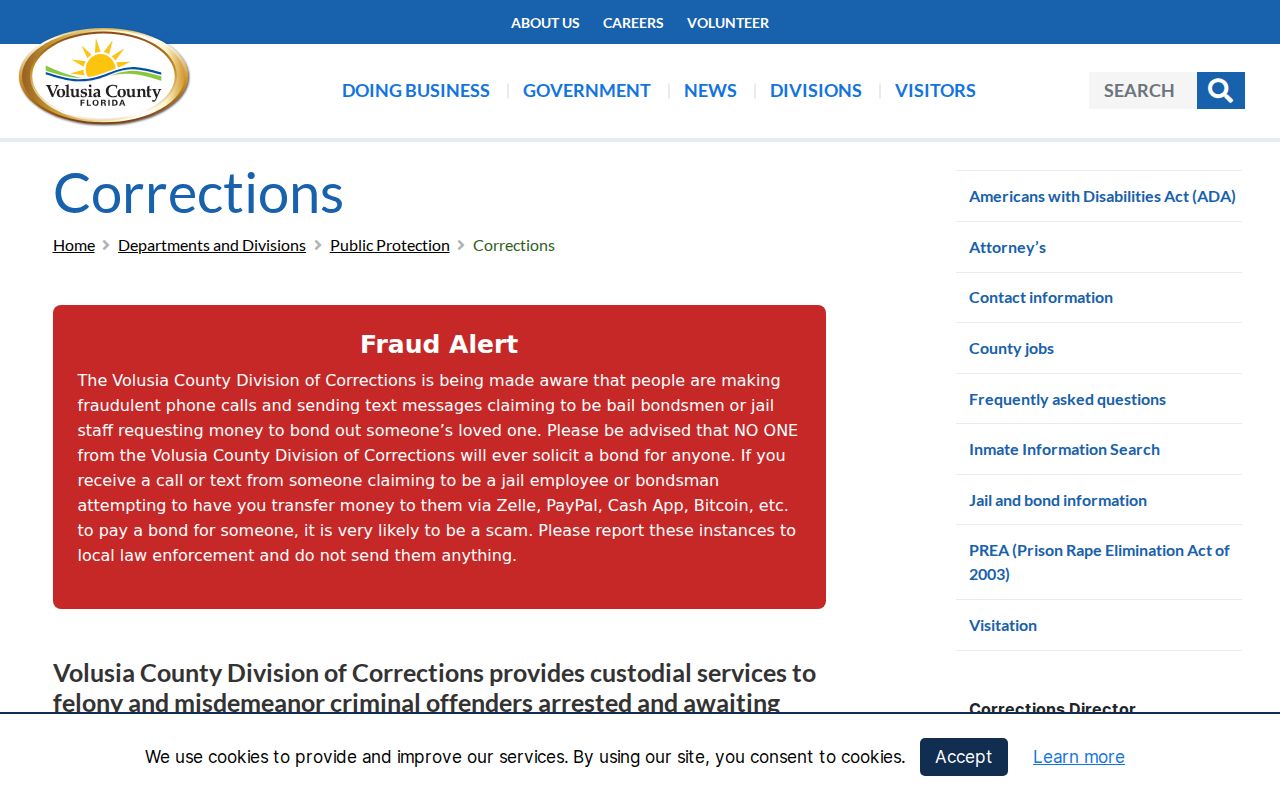
The county page is a separate custody source, so its identity and date must be checked against the address trail.
Open the Florida Corrections Offender Network.
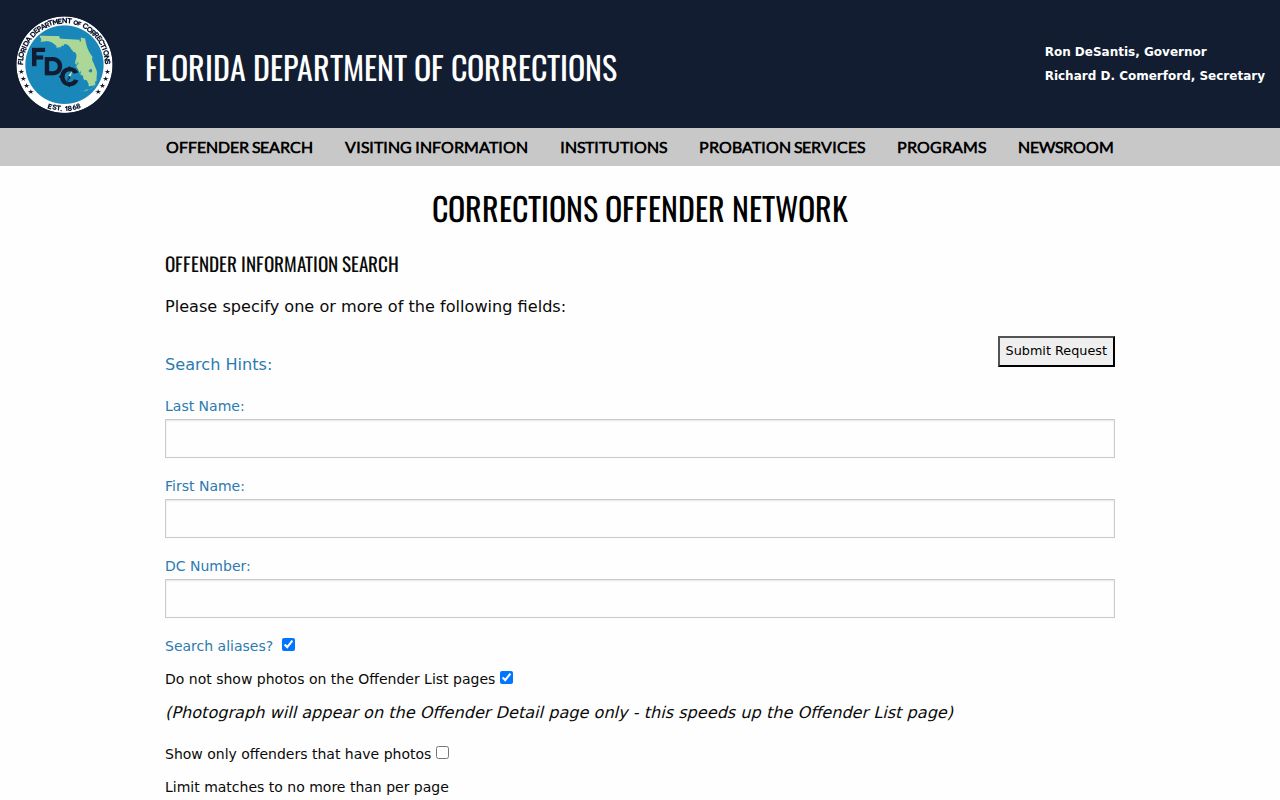
The state search covers Florida correctional custody and supervision, not a complete list of former Volusia occupants.
Read the Florida Vital Statistics Act.
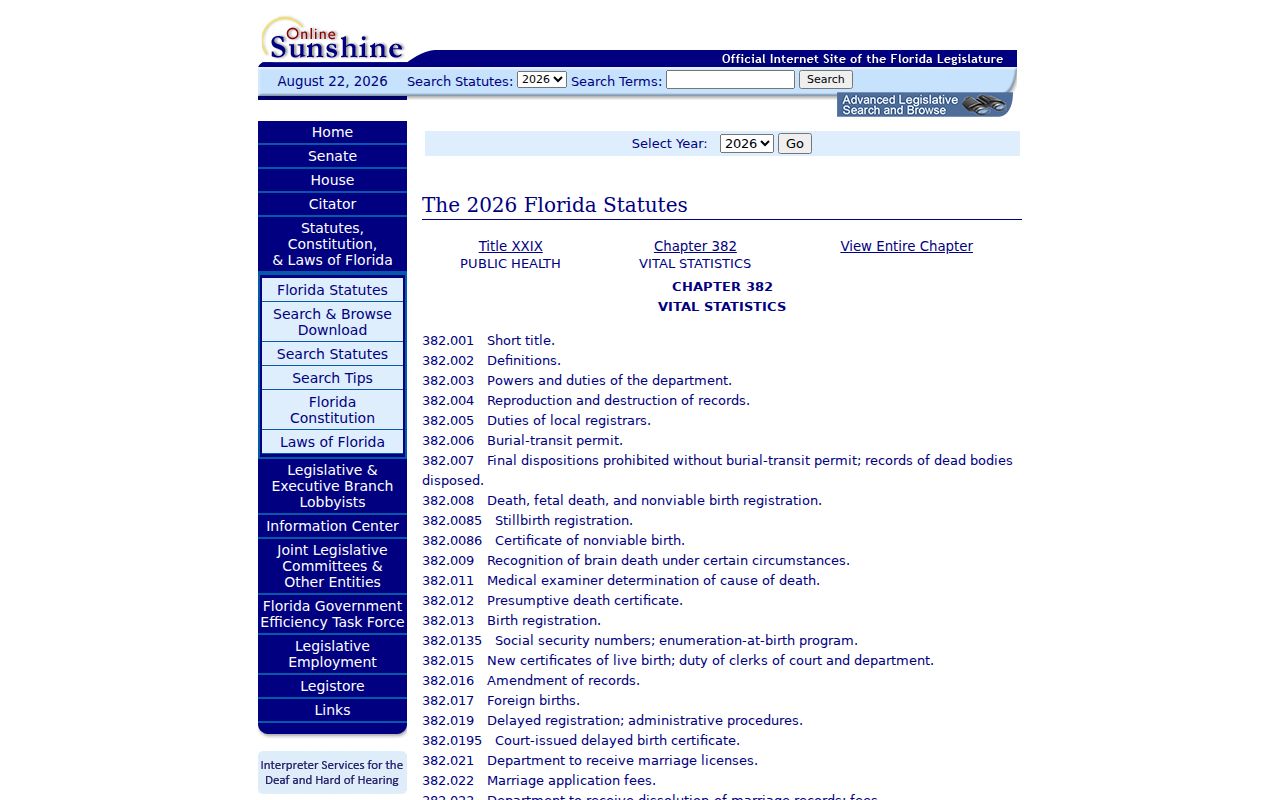
The statute explains why access to birth and cause-of-death information differs from public marriage or dissolution records.
Confirm Volusia County's Past Households
Close the trail with two kinds of proof whenever possible. A deed or parcel card ties an owner to land. A dated directory, census schedule, obituary, or permit can tie a person to the place or household. Keep spelling, initials, spouse, occupation, legal description, and dates in a simple research log. Similar surnames in the same city are not enough.
Previous residents may remain unknown when they were unlisted, when an edition is missing, or when a protected record is withheld. That is a source limit, not permission to guess. For a living person, stop at lawful public evidence and respect protected addresses.
Lawful use. Research Volusia County previous residents for family history, house history, heirs, or personal curiosity. Never use a record to stalk, threaten, or harass anyone.